German eID
The German eID step is the part of a DocIDV journey where a user verifies their identity using the electronic identity function of a German identity document.
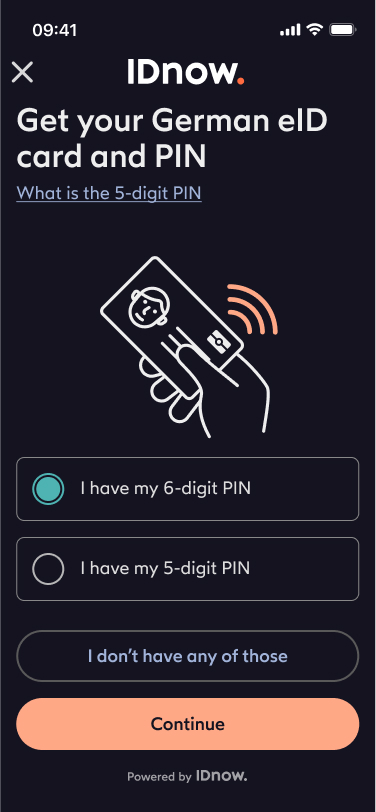
This step enables identity data to be read directly from the official chip of a supported German eID document through a dedicated eID process. It provides a trusted digital identity source and can be used as an alternative or complement to document image-based verification methods, depending on the configured journey.
This step is designed for journeys where electronic identification via the German eID ecosystem is supported and enabled.
What happens during a German eID step
The eID step is responsible for:
-
Prompting the user to start the eID process
- The user is informed that identity verification will be performed using their German eID-capable document.
- The step explains the prerequisites needed to continue.
-
Checking readiness for the eID interaction
- The user must have a supported German identity document with eID functionality enabled.
- The user must also have the required device setup and access conditions to complete the interaction.
-
Handling PIN interaction when required
- Depending on the configuration and the user’s eID status, the journey may include a PIN-related interaction.
- This can include PIN entry or PIN change before the eID data exchange is completed.
-
Initiating the eID data exchange
- The journey triggers the electronic identification process to access identity information from the document chip.
- This interaction typically relies on secure communication between the document, the user device, and the relevant eID infrastructure.
-
Retrieving identity data
- The system receives the identity attributes provided through the eID process.
- These attributes can then be used as part of the verification journey.
-
Returning the result to the flow
- Once the eID interaction is completed, the result is passed back into the broader journey so that the business process can continue.
Why this step matters
The German eID step provides a strong digital identity source directly linked to an official identity document.
Compared with purely image-based capture processes, it can offer a more direct and structured way to retrieve trusted identity data from the document chip through the official electronic identification function.
A well-integrated German eID step can help provide:
- a high-assurance identity data source
- reduced reliance on manual document image interpretation
- a smoother digital identity experience for eligible users
- stronger confidence in the origin of identity attributes
- a streamlined route for supported regulated or trust-sensitive use cases