Biometric Liveness
A biometry liveness step is the part of a DocIDV journey where the system checks whether the person interacting with the verification flow is a real, physically present human being at the time of the session.
Its purpose is to reduce the risk of impersonation and presentation attacks by verifying that the biometric sample comes from a live person rather than from a static image, a replayed video, a screen display, a mask, or another spoofing attempt.
In practical terms, this step guides the user through capturing a facial image or video sequence and submits that data for liveness analysis as part of the identity verification flow.
What happens during a biometry liveness step
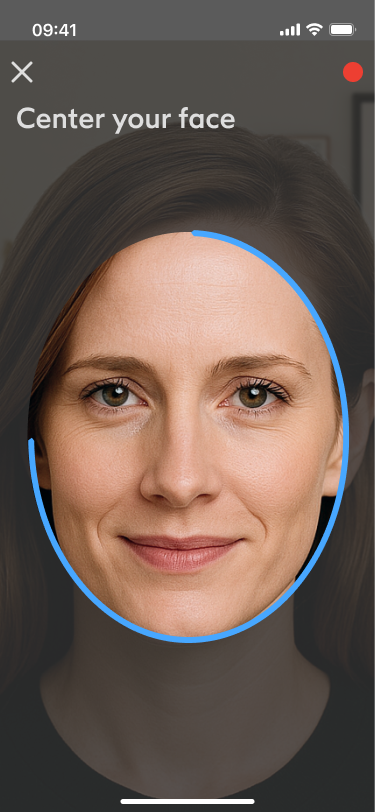
A biometry liveness step is responsible for:
-
Prompting the user to start the capture
- The user is informed that a face capture or short video capture is required.
- The interface explains how to position their face and follow the instructions.
-
Capturing biometric data
- The system captures the facial data needed for the liveness check.
- Depending on the journey, this may include:
- a selfie image
- a short selfie video
- a guided capture sequence
- one or more retry attempts if capture quality is insufficient
-
Checking capture usability
- The step verifies that the captured biometric sample is suitable for analysis.
- Typical expectations include:
- face clearly visible
- sufficient lighting
- limited blur or motion
- correct framing
- no major occlusion preventing analysis
-
Running liveness analysis
- The captured data is assessed to determine whether it originates from a live person present during the session.
- This is intended to detect common spoofing or presentation attack scenarios.
-
Preparing data for subsequent checks
- The resulting biometric sample and liveness outcome can then be used by later steps in the verification journey.
- For example, they may support facial comparison against the identity document portrait or feed into broader risk evaluation logic.
Why this step matters
The biometry liveness step is a key control in document-centric identity verification journeys.
Even if a document appears valid, the verification process still needs confidence that the person presenting it is physically present and not attempting to bypass the system using fraudulent media or artifacts.
A well-designed liveness step helps improve:
- fraud prevention
- resistance to spoofing attempts
- trust in remote identity verification
- automation reliability
- overall journey security
In short, this step helps confirm that the biometric evidence comes from a live participant and not from an artificial or replayed source.